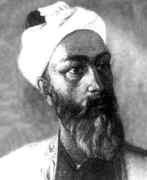
Ibn Sina (Avicenna)
Father of Early Modern Medicine
Why They Changed Society
Ibn Sina's 'Canon of Medicine' is one of the most important books ever written. This five-volume encyclopedia systematized all known medical knowledge of the ancient and Islamic worlds, introduced experimental medicine, described contagious diseases, outlined quarantine procedures, and cataloged over 800 medicinal substances. It was used as the primary medical textbook at universities in Europe and the Middle East from the 12th to the 17th century — longer than any other medical text in history. His philosophical works also profoundly influenced Thomas Aquinas, Duns Scotus, and the development of Western thought. Ibn Sina demonstrated that one mind could advance both the sciences and the humanities to extraordinary heights.
Impact by the Numbers
600
Years as Medical Textbook
450+
Works Authored
800+
Medicinal Substances Cataloged
Timeline
At age 17, cured the Samanid ruler Nuh ibn Mansur, gaining access to the royal library.
Began writing 'Kitab al-Shifa' (The Book of Healing), a vast philosophical and scientific encyclopedia.
Completed 'Al-Qanun fi al-Tibb' (The Canon of Medicine), the most influential medical text in history.
Gerard of Cremona translated the Canon to Latin; it became the standard medical textbook in Europe for 500 years.
Key Contributions
The Canon of Medicine (1025)
A five-volume medical encyclopedia that served as the primary medical textbook worldwide for over 600 years.
Contagion Theory
Described contagious diseases and introduced the concept of quarantine to prevent their spread.
Clinical Trials
Laid out rules for testing the effectiveness of drugs, establishing principles of experimental medicine.
The Book of Healing
Wrote one of the largest encyclopedias ever, covering logic, natural sciences, mathematics, and metaphysics.
Notable Quotes
“The knowledge of anything, since all things have causes, is not acquired or complete unless it is known by its causes.
— The Canon of Medicine
“Medicine is the science by which we learn the various states of the human body in health and when not in health.
“The world is divided into men who have wit and no religion, and men who have religion and no wit.